

Renewables unlock a new competitive era for steel
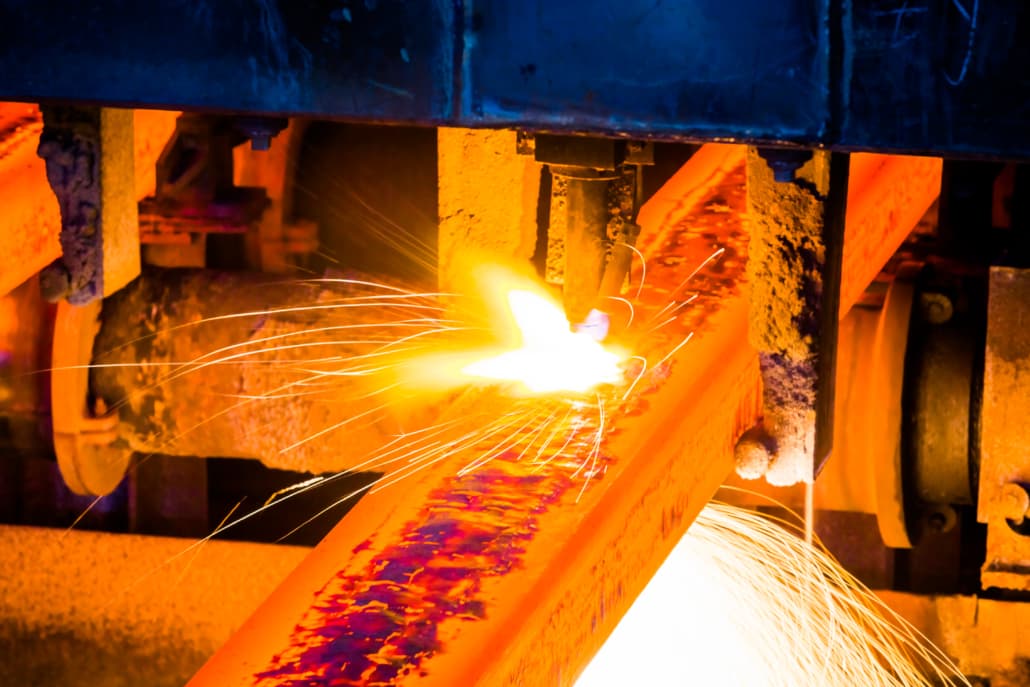
In the face of volatile energy costs and mounting geopolitical tensions, steel companies across Latin America are discovering strategic opportunities in renewable PPAs to enhance competitiveness and achieve greater operational stability.
Energy is a critical input for the metallurgical industry, particularly in Latin America, where the sector faces the dual challenge of operating in a volatile global environment while advancing toward a more competitive, cleaner energy matrix. Against this backdrop, renewable energy—especially through power purchase agreements (PPAs) combined with storage solutions—is emerging as a strategic lever to reduce costs, hedge against volatility, and strengthen international positioning.
Steelmaking accounts for nearly 8% of global energy consumption and approximately 7% of CO₂ emissions, making it one of the most energy-intensive industries and mounting pressure to optimize its energy mix. Throughout Latin America, the steel industry plays a significant role in the economy. Brazil leads with 61% of crude steel output, followed by Mexico (together accounting for up to 85% of regional production) and Argentina with 8%.
This energy-intensive profile is predominantly driven by reliance on electric arc furnaces (EAFs), which consume 400-500 kWh per ton of steel produced. Within a high-tariff or highly volatile pricing environment, electricity consumption directly impacts plant operating margins. A recent illustration: in early 2025, electricity prices in Brazil surged from 90 reais/MWh (approximately USD 18/MWh) to 350 reais/MWh (approximately USD 70/MWh) within a matter of weeks, due to preventive measures tied to hydrological risk. During previous crises, such as droughts, prices exceeded 1,000 reais/MWh (over USD 200/MWh).
The region also exhibits structurally elevated prices combined with frequent fluctuations. In 2023, the average tariff for industrial customers reached USD 165.8/MWh in Brazil and USD 151.6/MWh in Mexico—levels substantially above those observed in developed industrial markets. Cost sensitivity is pronounced: a USD 10/MWh increase can translate into an additional USD 4–5 per ton of output. For a facility producing 1 million tons annually, that equates to as much as USD 5 million in additional annual energy costs.
Renewable energy as an ally for metallurgical companies amid a complex landscape
For steel producers throughout Latin America, access to reliable, cost-competitive power has become an increasingly decisive factor in improving margins, guiding investment decisions, and sustaining day-to-day operations. Within this context, the region possesses a tangible advantage: abundant solar and wind resources position Latin America among the world’s most cost-efficient areas for renewable energy generation.
In 2024, the levelized cost of energy (LCOE) for renewables in Latin America declined by approximately 8%, driven by reduced capital costs and more efficient supply chains. In markets including Brazil, Chile, and Mexico, single-axis tracking solar PV is already priced within the range of Brazil’s 2022 federal auction prices, which averaged USD 32.2/MWh for solar and USD 33.1/MWh for wind.
By illustration, executing a renewable PPA in the USD 35–60/MWh range—versus electricity prices of approximately USD 150–160/MWh—can deliver annual savings of roughly USD 40 million for a facility consuming approximately 400 GWh, while simultaneously shielding it from tariff, regulatory, or climate-related shocks.
This differential is fundamentally reshaping the financial equation for steel throughout the region. Renewables have evolved beyond being merely a sustainable alternative; they have become a cost-control tool and a hedge against energy volatility.
Simultaneously, global trade dynamics introduce another layer of uncertainty. According to ALACERO data, imports of finished and semi-finished steel from China into Latin America reached approximately 14 million tons in 2024—more than three times the volume recorded in 2010—while regional steel consumption declined by roughly 1% to approximately 67.4 million tons. With trade defense mechanisms remaining limited, steelmakers and ALACERO itself are advocating for faster, more coordinated measures to address rising imports at unfair prices.
Within this environment, renewable energy represents far more than a decarbonization tool: it is a strategic asset enabling companies to maintain their position in global markets even as the dynamics of international trade shift.
Albras and ArcelorMittal: landmark cases for the industry
Two strategic partnerships clearly illustrate how renewable energy can redefine the operating paradigm of energy-intensive industries: the collaboration between Atlas Renewable Energy and Albras, Brazil’s leading primary aluminum producer, and the agreement with ArcelorMittal, the country’s leading steel producer. Both initiatives reinforce Atlas’s role as a strategic partner in decarbonization and in strengthening the competitiveness of Latin America’s metallurgical sector.
In Albras’s case, Atlas structured one of the most significant PPAs in Latin America, supported by a record USD 447.8 million loan from Brazil’s BNDES—the largest dollar-denominated financing the institution has extended for a renewable energy project. These resources enabled the construction of Vista Alegre, a 902 MWp (768 MWac) solar facility capable of generating approximately 2 TWh per year and avoiding 2.4 million tons of CO₂ emissions throughout its first 20 years of operation.
Since January 2025, Vista Alegre has supplied clean energy to Albras under a 21-year contract, reinforcing a partnership that already included the Boa Sorte solar park (438 MWp), also designed to reduce the carbon footprint of aluminum produced in Brazil.
The agreement with ArcelorMittal takes this approach a step further within the steel industry. In this context, ArcelorMittal and Atlas Renewable Energy completed construction of Phase B of the Luiz Carlos solar plant in Paracatu, Minas Gerais, where Atlas developed a 315 MWp photovoltaic facility dedicated to supplying ArcelorMittal’s steel operations in southern and southeastern Brazil under a joint venture and asset transfer model.
With an estimated annual generation of approximately 578 GWh, this asset directly supports ArcelorMittal’s objective of sourcing 100% of its electricity consumption in Brazil from renewable sources by 2030, while advancing its global low-carbon steel ambitions.
Both projects incorporate technological and social components of strategic relevance. At the Luiz Carlos complex, state-of-the-art solutions—bifacial modules, advanced tracking systems, and pre-assembled cabling—optimize solar output and long-term operational efficiency.
In parallel, Atlas deploys ESG programs that combine technical training for women in solar plant construction with education in programming, robotics, and digital skills for young people, alongside the creation of thousands of jobs and social initiatives in the areas surrounding projects such as Vista Alegre and Boa Sorte. These efforts focus on workforce inclusion, education, and local development, demonstrating that energy competitiveness can advance in tandem with lasting social impact.
These cases highlight one of Atlas’s core competencies: its bespoke approach, structuring agreements that not only ensure clean, abundant energy but also align with each client’s consumption profile, risk tolerance, and climate objectives. To accomplish this, Atlas combines:
– One of the largest solar portfolios in Latin America (exceeding 8.4 GW in development, operation, or construction).
– The backing of Global Infrastructure Partners, with the capacity to mobilize more than USD 84 billion in investments.
– Extensive experience structuring PPA contracts with major industrial consumers, including AngloAmerican, Codelco, Engie, Dow, Albras, and ArcelorMittal.
Atlas has also demonstrated its ability to replicate this strategic approach across other critical regional markets. In late 2024, it executed a 450 GWh-per-year PPA with Grupo CAP, Chile’s leading mining and industrial conglomerate, through its subsidiaries Compañía Minera del Pacífico (CMP) and Aguas CAP.
This 15-year agreement includes the development of a solar facility in the Atacama region equipped with a battery energy storage system (BESS), enabling the delivery of 100% clean energy around the clock and advancing the decarbonization of Chile’s steel industry.
With this project, Atlas adds more than 1,000 MW of renewable capacity paired with storage in Chile, reinforcing its position as a leading provider of customized energy solutions for large-scale industry throughout Latin America. As demonstrated in Brazil with Albras and ArcelorMittal, the CAP case in Chile illustrates the company’s capability to design and execute long-term energy contracts that align competitiveness, reliability, and decarbonization.
Renewable energy as an industrial strategy
In an industry where producing a ton of steel can require up to 500 kWh, securing long-term clean power contracts has become a critical strategic imperative. With average regional tariffs exceeding USD 150/MWh, accessing renewable PPAs in the USD 30–50/MWh range can yield annual savings of tens of millions of dollars while reducing exposure to macroeconomic and geopolitical risks.
Atlas Renewable Energy has demonstrated that this is achievable. The fact that its Vista Alegre solar park supplies clean power to Albras not only delivers measurable savings and a guaranteed supply of clean energy for 21 years but also highlights the potential of an energy partnership capable of enhancing profitability, resilience, and reputation across the metal and steel industry. Throughout Latin America, the energy transition is not a distant aspiration—it represents a tangible business model already in motion.
This article was created in partnership with Castleberry Media. At Castleberry Media, we are dedicated to environmental sustainability. By purchasing carbon certificates for tree planting, we actively combat deforestation and offset our CO₂ emissions threefold.
Share This Entry
More articles